

Understanding RV Weight for Safety, Performance, and Peace of Mind
One of the most overlooked parts of RV ownership is knowing how much your RV actually weighs when it’s loaded and ready to travel. Many owners assume that staying under the manufacturer’s stated limits is enough, but without weighing your RV, you’re guessing.
At Poulsbo RV, we regularly see issues that trace back to improper weight distribution or overloaded axles. Having your RV weighed isn’t just a recommendation; it’s one of the most important safety steps you can take before hitting the road.
Why RV Weight Matters
RVs operate under strict weight ratings for a reason. Every motorhome and towable is engineered with specific limits for axles, suspension, tires, brakes, and frames. When those limits are exceeded — even slightly — it can affect:
Handling and Stability
Overloaded RVs are more difficult to steer and control, especially in crosswinds, during emergency braking, or on mountain grades.
Braking Performance
Excess weight increases stopping distance and strains braking systems, creating safety risks in traffic or downhill situations.
Tire Safety
Tires are rated for specific loads. Overloading leads to excess heat buildup, uneven wear, and an increased risk of blowouts.
Suspension and Frame Stress
Consistent overloading accelerates wear on suspension components, wheel bearings, and frame structures.
Fuel Economy
Heavier loads demand more from your engine, reducing efficiency and increasing operating costs.
Understanding Your RV’s Weight Ratings
Before you weigh your RV, it helps to understand the key terms you’ll see on your certification label:
GVWR (Gross Vehicle Weight Rating)
The maximum allowable weight of the fully loaded RV, including passengers, fuel, water, cargo, and supplies.
GAWR (Gross Axle Weight Rating)
The maximum weight each axle is designed to carry.
GCWR (Gross Combined Weight Rating)
For motorhomes and tow vehicles, this is the maximum allowable weight of the RV plus anything being towed.
CCC (Cargo Carrying Capacity)
The amount of weight available for cargo after accounting for the empty vehicle weight.
Staying within all of these ratings is critical—not just the overall GVWR.
Why You Can’t Rely on “Dry Weight”
Many RV buyers see the “dry weight” listed in brochures and assume that’s what their RV weighs. In reality, dry weight does not include:
- Water in tanks
- Propane
- Batteries
- Dealer-installed options
- Personal belongings
- Food, clothing, and gear
Once fully loaded for travel, most RVs weigh significantly more than their advertised dry weight.
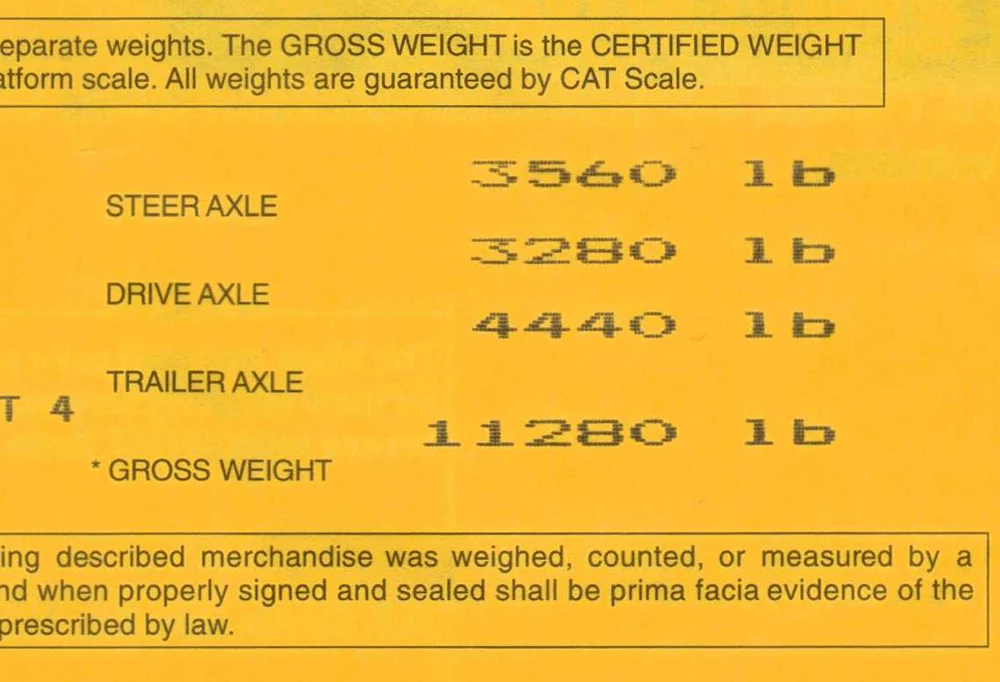
The Importance of Weighing Each Axle
It’s not enough to weigh your RV as a single total number. Individual axle weights matter just as much—sometimes more.
For motorhomes, uneven loading can overload one axle while the total weight still appears within limits. For travel trailers and fifth wheels, improper tongue or pin weight affects towing stability and can cause sway.
Weighing each axle separately ensures:
- Proper weight distribution
- Safe tire loading
- Balanced braking
- Improved handling
For even greater accuracy, some RVers opt for four-corner weighing, which measures the weight on each individual wheel position.
When Should You Weigh Your RV?
You should weigh your RV:
- After purchasing it
- After loading it for a major trip
- After installing heavy accessories
- If you notice handling issues
- Before long-distance travel
Where to Get Your RV Weighed
Most RVers use certified truck scales, such as CAT scales found at many truck stops. The process is straightforward and typically takes only a few minutes.
For more detailed axle and corner weights, specialized RV weighing services may be available at rallies or service facilities.

What Happens If You’re Overweight?
If your RV exceeds its ratings, don’t panic—but don’t ignore it either. Solutions may include:
- Redistributing cargo
- Traveling with less water
- Removing unnecessary items
- Upgrading suspension components (where appropriate)
- Ensuring tires are properly rated for the load
Our Poulsbo RV Service Team can help review your setup and recommend safe adjustments if needed.
The Long-Term Benefits of Knowing Your Weight
Hard acceleration burns more fuel, and frequent heavy braking wastes momentum you’ve already paid for in fuel.
Plan ahead in traffic. Leave extra following distance. Coast gradually when approaching stops. Smooth driving habits improve both fuel economy and safety.
Watch Your Weight
The heavier your RV, the harder your engine has to work. Extra cargo, full water tanks, unnecessary gear, and aftermarket additions all add weight.
Before long trips:
• Remove unused items
• Travel with partial water tanks when possible
• Distribute weight properly
• Verify you’re within safe weight ratings
If you’re unsure about your loaded weight, having your RV weighed is a smart step toward both safety and efficiency.
The Long-Term Benefits of Knowing Your Weight
When your RV is properly loaded and balanced, you’ll notice:
- Smoother handling
- More stable towing
- Improved tire life
- Reduced mechanical strain
- Greater confidence behind the wheel
Weight management is one of the simplest ways to improve safety and protect your investment.

Final Thoughts
Having your RV weighed isn’t about being overly cautious—it’s about being informed. When you know your numbers, you eliminate guesswork and dramatically reduce the risk of tire failure, brake issues, and handling problems.
If you have questions about your RV’s weight ratings, suspension setup, or tire capacity, stop by any Poulsbo RV location. We’re here to help you travel safely, confidently, and within the limits your RV was designed to handle.


