
Your RV awning helps turn your campsite into an outdoor living space. Whether you’re relaxing in the shade on a warm afternoon or staying dry during a light rain, a properly maintained awning can make every camping trip more comfortable and enjoyable.
Like any part of your RV, awnings work best when they’re operated carefully and maintained regularly. At Poulsbo RV, we know a little preventative care can go a long way toward helping RV owners avoid unnecessary repairs and extend the life of their awning system.
Here are some helpful tips for operating, cleaning, and maintaining your RV awning.
Why RV Awning Maintenance Matters
RV awnings are constantly exposed to:
- sunlight
- wind
- rain
- dirt
- tree debris
- changing temperatures
Over time, these conditions can wear down awning fabric, hardware, and moving components. Regular cleaning and inspections help prevent:
- fabric damage
- mildew buildup
- rust
- mechanical wear
- unexpected failures at the campsite
Keeping your awning in good condition helps ensure it stays reliable throughout camping season.
Safe Awning Operation Tips
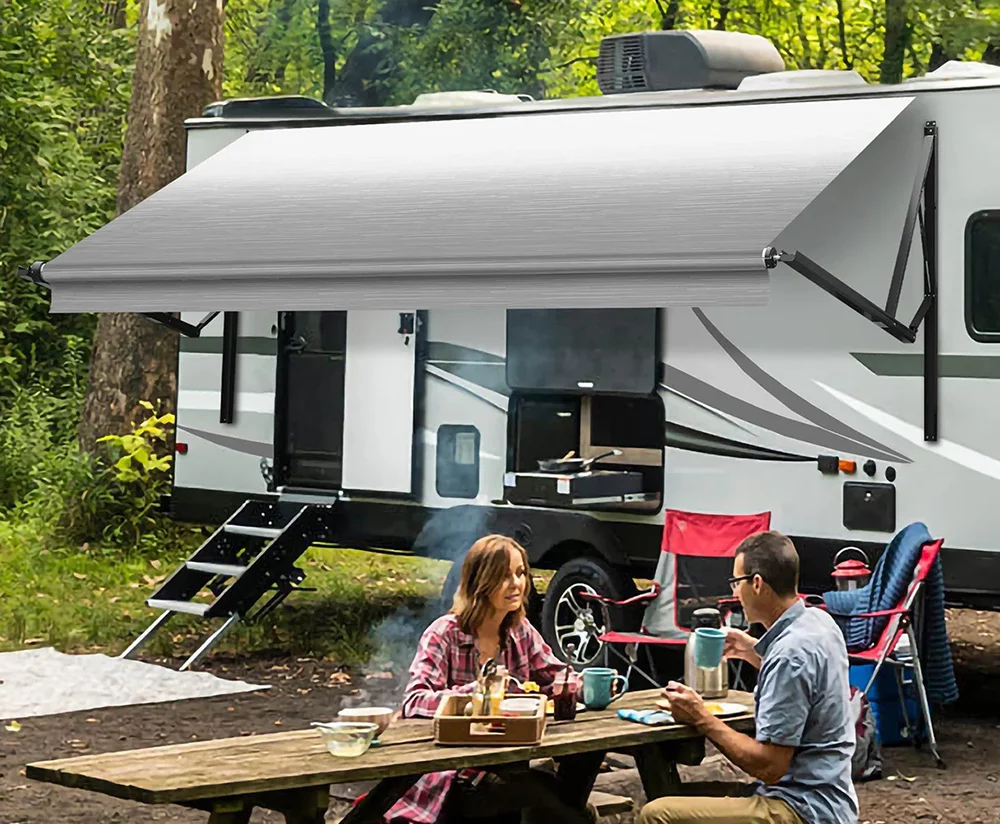
Before extending your awning, always make sure your RV is:
- parked on stable ground
- properly leveled
- securely stabilized
This helps reduce strain on the awning arms and supports smoother operation.
Before deploying the awning:
- check for low branches
- clear debris from the area
- make sure nothing blocks the awning’s path
If the awning feels stuck or uneven, avoid forcing it open or closed. Resistance can indicate debris, alignment issues, or mechanical problems that should be inspected further.
Manual vs. Power Awnings
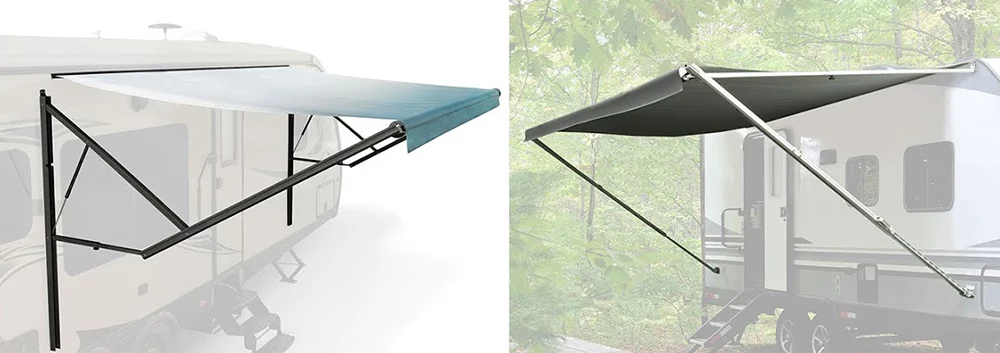
Manual Awnings
Manual awnings typically require:
- releasing travel locks
- extending the awning with a pull rod
- securing support arms properly
Take your time during setup to ensure the awning is fully supported and tensioned correctly.
Power Awnings
Power awnings operate with the push of a button, making setup easier and faster. However, it’s still important to:
- monitor the awning while extending or retracting
- avoid holding the switch longer than necessary
- stop operation immediately if movement appears uneven
Even automatic systems benefit from regular inspection and careful operation.
Be Aware of Wind & Weather Conditions
One of the most important parts of awning care is understanding weather limitations.
Most RV awnings are not designed to handle:
- strong winds
- heavy rain
- pooling water
- severe storms
As a general rule:
- retract your awning during high winds
- never leave it extended unattended
- lower one side slightly during light rain to encourage water runoff
Unexpected wind gusts are one of the most common causes of awning damage.
Cleaning Your RV Awning
Routine cleaning helps prevent:
- mildew
- staining
- dirt buildup
- premature fabric wear
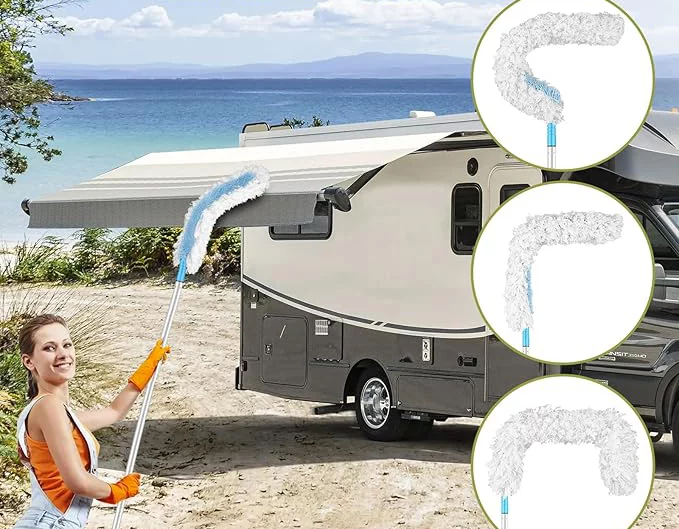
To clean your awning:
1. Fully Extend the Awning
Open the awning completely to access the entire surface.
2. Rinse Off Loose Dirt
Use fresh water to remove leaves, dust, and debris.
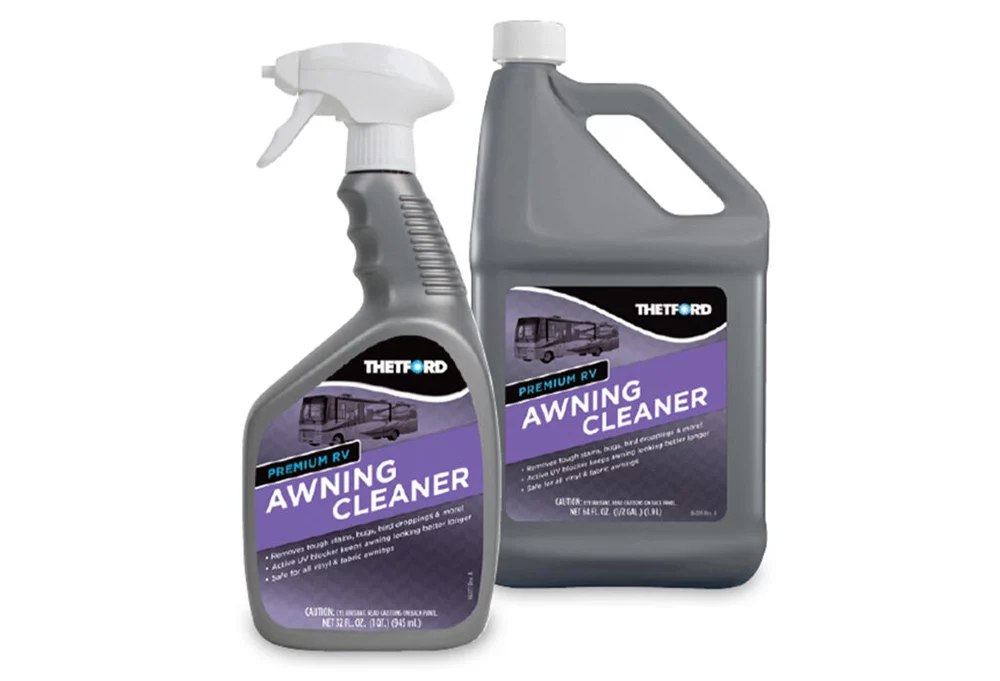
3. Clean with Mild Soap & Water
Use a soft brush or sponge with a gentle soap solution to clean the fabric carefully.
4. Rinse Thoroughly
Remove all soap residue to help prevent streaking or buildup.
5. Let the Awning Dry Completely
Always allow the awning to fully dry before retracting it to reduce the risk of mold or mildew.
Avoid using:
- bleach
- harsh cleaners
- abrasive brushes
- pressure washers
These can damage both the fabric and hardware.
Inspect Hardware & Moving Components
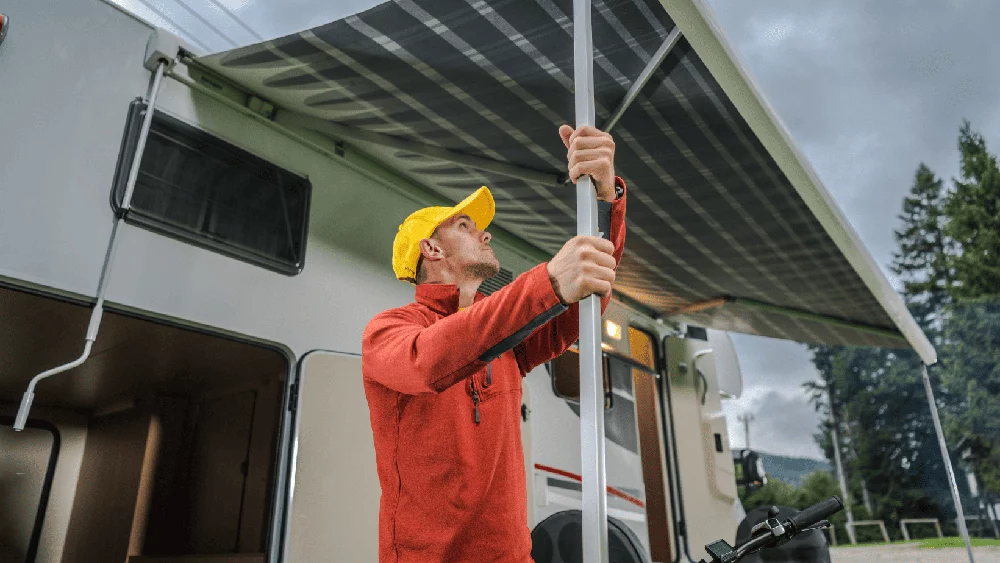
In addition to cleaning the fabric, regularly inspect:
- support arms
- brackets
- mounting points
- springs
- fasteners
Look for:
- rust
- loose bolts
- bent components
- unusual movement
- uneven retraction
Lubricating moving parts with a manufacturer-approved dry silicone lubricant can help keep the system operating smoothly.
If your awning begins:
- retracting unevenly
- making unusual noises
- sagging
- struggling to extend properly
…it may be time for professional inspection or service.
Protecting Your Awning During Storage
If your RV will be stored for an extended period:
- make sure the awning is clean and dry
- inspect for damage before storage
- secure travel locks properly
Keeping debris and moisture trapped inside a rolled awning for long periods can lead to mildew and fabric deterioration.
When to Schedule Professional Awning Service
While basic cleaning and inspections can be handled by many RV owners, some repairs are best left to trained technicians.
Professional service may be needed for:
- torn fabric
- motor issues
- damaged arms
- spring tension problems
- alignment concerns
- electrical troubleshooting on power awnings
Final Thoughts
Your RV awning plays a major role in making your campsite more comfortable and enjoyable. With regular cleaning, careful operation, and routine inspections, you can help extend the life of your awning and avoid many common problems on the road.
At Poulsbo RV, our Service and Parts teams are here to help keep your RV ready for every adventure. Whether you need awning maintenance, replacement parts, or professional repairs, we’re happy to help you enjoy more relaxing days outdoors wherever your travels take you.


