
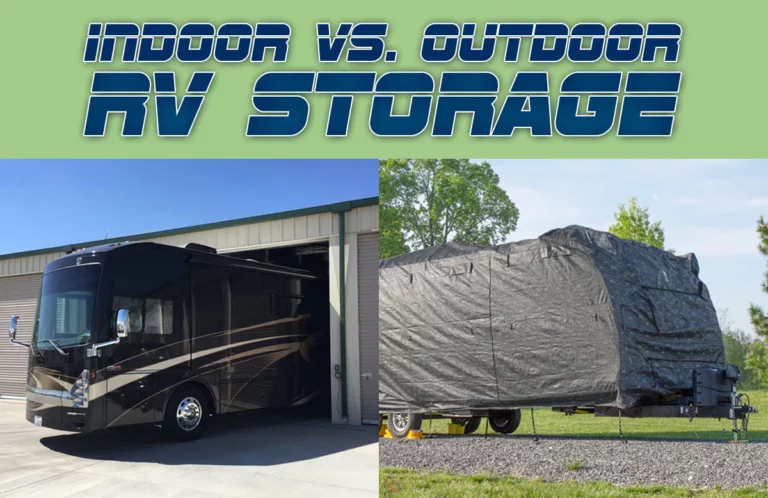
When the travel season slows down, one important question every RV owner faces: where to store their RV. Storage decisions can affect your RV’s condition, longevity, and even how easy it is to get back on the road when the next adventure calls. The two most common options are indoor storage and outdoor storage, and each comes with its own advantages and trade-offs.
At Poulsbo RV, we often talk with RV owners about storage choices that best fit their budget, location, and how often they plan to use their RV. Understanding the differences between indoor and outdoor storage can help you make the best decision for protecting your investment.
Indoor RV Storage: Maximum Protection
Indoor RV storage offers the highest level of protection from the elements. When stored inside a building or enclosed facility, your RV is shielded from sun exposure, heavy rain, snow, and fluctuating temperatures. Over time, these environmental factors can contribute to fading paint, roof deterioration, seal damage, and tire wear.
Storing an RV indoors can also help reduce long-term maintenance needs. Without constant exposure to UV rays, moisture, and debris, exterior surfaces and seals often stay in better condition. Many indoor storage facilities also offer added security measures such as controlled access, surveillance systems, or enclosed buildings.
The biggest downside to indoor storage is cost and availability. Indoor spaces are typically more expensive than outdoor options and may be limited in certain areas, especially for larger motorhomes or fifth wheels.
Outdoor RV Storage: Accessible and Affordable
Outdoor storage is the most common and widely available option for RV owners. Storage lots, dedicated RV storage facilities, and even space at home are typical solutions for outdoor storage. These options are often more affordable and easier to find than indoor facilities.
However, outdoor storage means your RV will be exposed to the elements. Sunlight, rain, snow, wind, and debris can slowly affect exterior surfaces, seals, and tires over time. In some climates, prolonged exposure to moisture can also contribute to mold or mildew issues if the RV is not properly maintained.
Many RV owners reduce these risks by using RV covers, washing and waxing regularly, and inspecting seals and roof components periodically. Covered storage structures are also available in some facilities and offer partial protection while still being more affordable than fully enclosed indoor storage.
Storing Your RV at Home
Some RV owners prefer to store their RV at home if space and local regulations allow it. This option eliminates storage fees and makes it easier to access the RV for maintenance or quick trips.
Before choosing home storage, it’s important to check local ordinances or homeowners association rules. Some neighborhoods have restrictions on driveway or yard storage for large vehicles. Security and visibility are also considerations when storing an RV at home.
If home storage is an option, many owners add a parking pad, use wheel covers, or install protective covers to help reduce weather exposure.
Security Considerations
Wherever you store your RV, security should always be part of the decision. Indoor facilities often provide controlled access and surveillance, while outdoor facilities typically rely on fencing, lighting, and gate access.
If storing at home or in an outdoor lot, additional security steps such as wheel locks, hitch locks, or battery disconnects can help deter theft and provide peace of mind.
Choosing the Best Option for Your RV
The right storage solution depends on several factors, including climate, budget, storage availability, and how often you plan to use your RV. Indoor storage offers the greatest protection but may come at a higher cost, while outdoor storage provides flexibility and affordability with a little extra maintenance.
No matter which option you choose, regular inspections, proper cleaning, and protective measures can go a long way toward keeping your RV in excellent condition.
Final Thoughts
Proper RV storage helps protect your investment and ensures your RV is ready for the next trip when travel season returns. Whether stored indoors, outdoors, or at home, taking the time to prepare and protect your RV can extend its lifespan and reduce future repairs.
If you have questions about preparing your RV for storage or want recommendations for maintenance before storing it, stop by any Poulsbo RV location. Our team is always happy to help keep your RV protected and ready for the road ahead.


