

Running out of power is one of the fastest ways to cut an RV trip short. Whether you rely on batteries, solar, or a generator, understanding where your power is going is just as important as how much you have.
At Poulsbo RV, we often see power issues that aren’t caused by faulty equipment—but by everyday appliances quietly draining batteries faster than expected. Knowing which items use the most electricity helps you plan better, avoid surprises, and stay comfortable wherever you camp.
Why Power Awareness Matters
RV electrical systems are very different from a home system. When you’re not plugged into shore power, your available energy is limited by battery capacity, solar input, generator runtime, and weather conditions.
Monitoring power use helps you:
• Extend battery life
• Avoid inverter overloads
• Reduce generator run time
• Stay powered through the night
• Prevent unnecessary system strain
Even RVs with solar and lithium batteries can run out of power quickly if high-draw appliances are used without a plan.
High-Draw Appliances to Watch Closely
Some appliances use far more electricity than most RVers expect. These are the most common culprits.
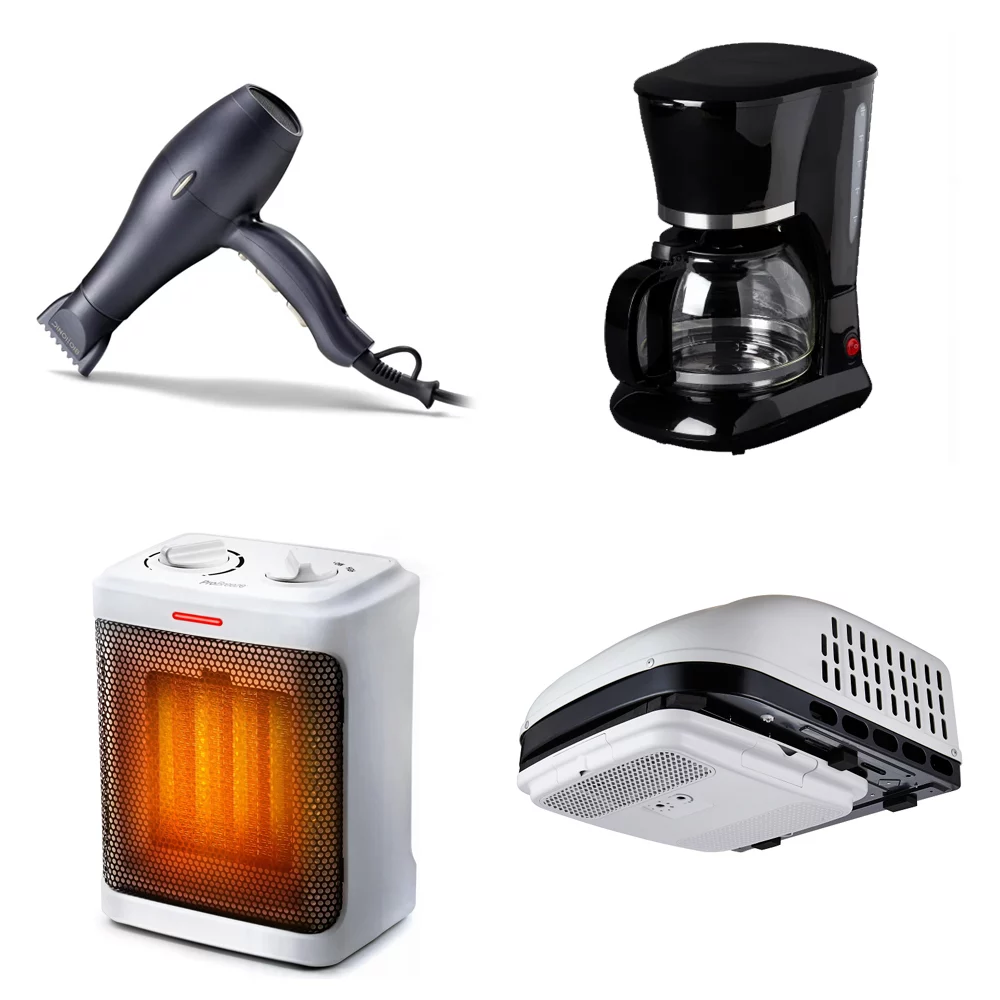
Hair Dryers
Hair dryers are one of the fastest ways to overload an inverter or drain batteries. Many models pull between 1,800 and 2,500 watts, which is a massive draw for RV electrical systems. When boondocking, this is one appliance best left unplugged.
Coffee Makers and Keurig-Style Brewers
Single-serve coffee makers are convenient, but they can draw up to 1,500 watts during heating cycles. Even short use adds up quickly when running on batteries. Manual coffee options use no electricity and save power for essentials.
Space Heaters
Electric space heaters are among the highest power consumers in an RV, often pulling 2,000 to 5,000 watts. While they’re effective on shore power, they’re rarely practical off-grid and can overwhelm electrical systems almost instantly.
Air Conditioners
Air conditioners require a large surge to start and significant power to run. Startup draw can exceed 3,000 watts, with ongoing use pulling well over 1,000 watts. Without a generator or large battery bank, extended AC use off-grid is usually unrealistic.
Cooking Appliances That Drain Power Quickly
Electric cooking appliances are convenient but power-hungry.
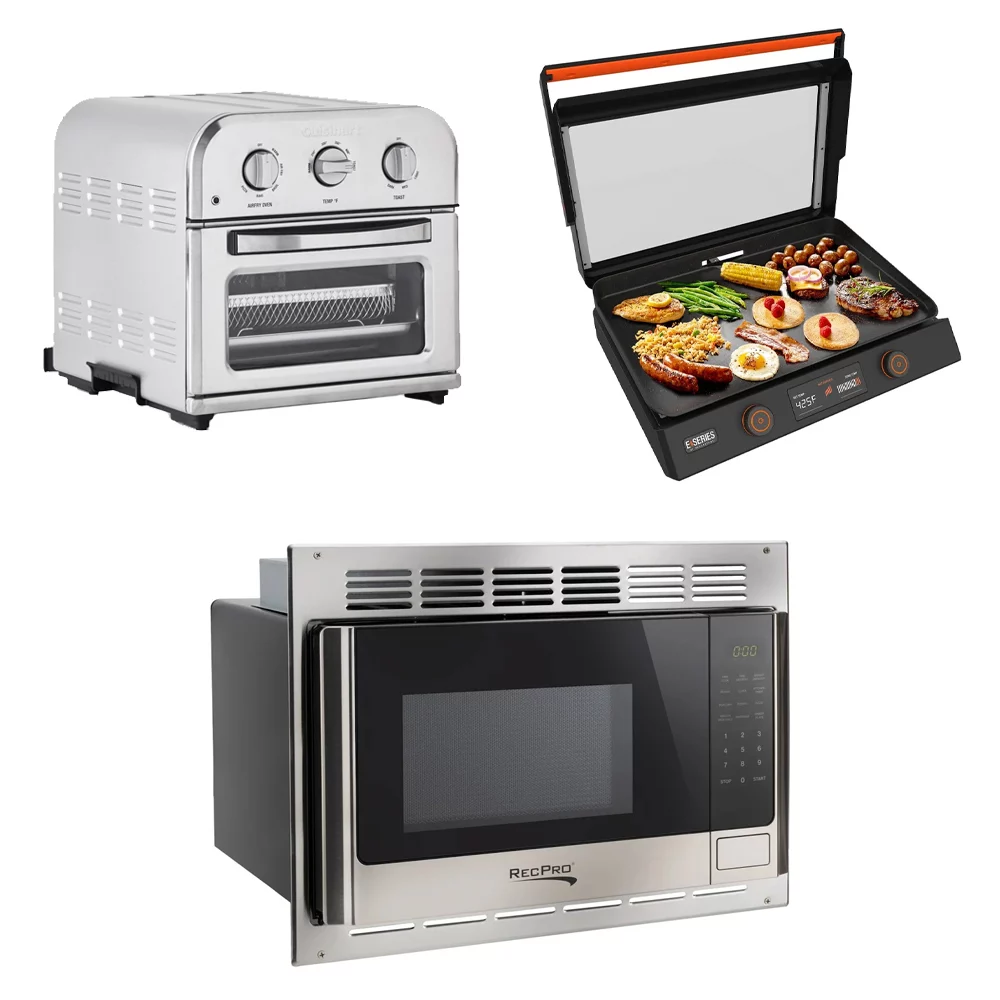
Griddles
Electric griddles typically draw between 1,000 and 1,800 watts. Even short cooking sessions can have a noticeable impact on battery levels.
Microwaves
Microwaves commonly use 600 to 1,700 watts depending on size and power setting. Frequent use off-grid can drain batteries faster than expected.
Toaster Ovens
Toaster ovens may seem efficient, but they still draw 1,200 to 1,400 watts. Baking or reheating meals off-grid can quickly reduce available power.
Comfort and Convenience Loads That Add Up
Some appliances don’t seem like major drains on their own—but extended use makes a difference.
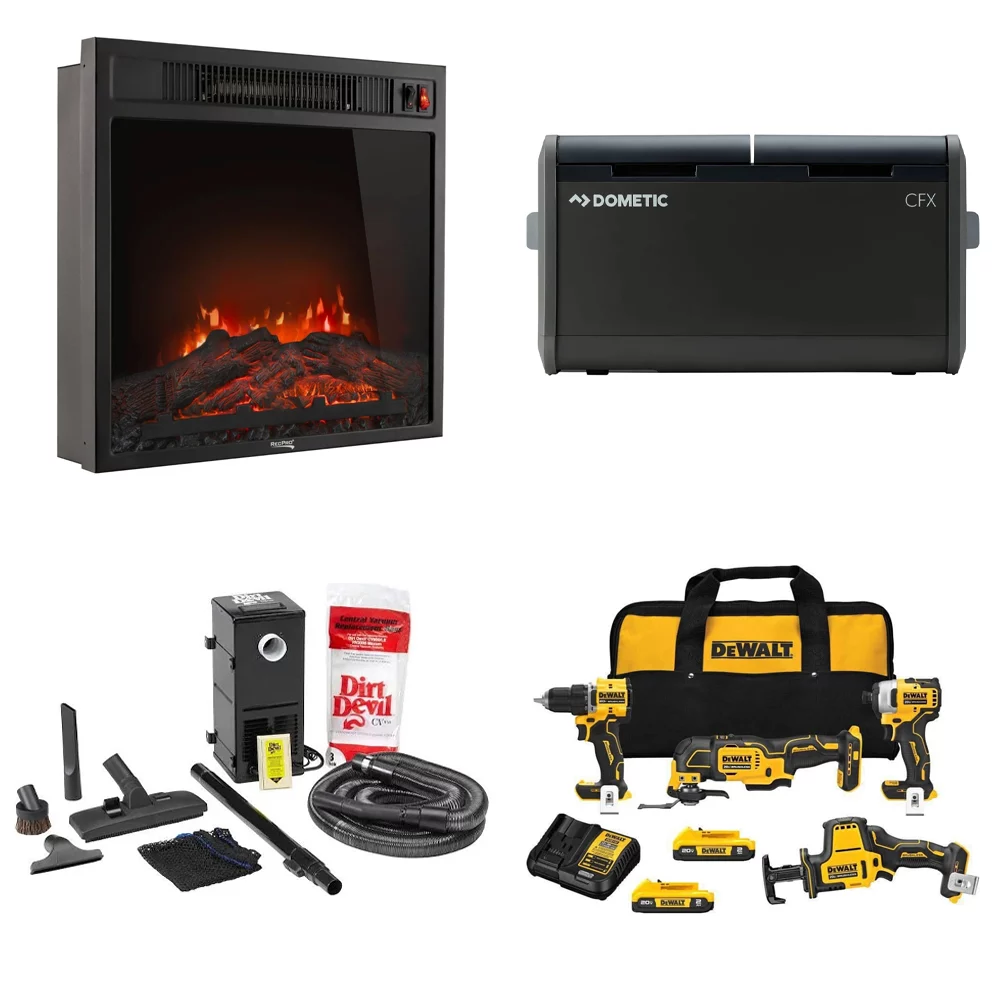
Electric Fireplaces
Electric fireplaces add ambiance and heat, but many pull around 1,500 watts when operating. They’re best reserved for times when shore power is available.
Electric Coolers
Electric coolers use less power than many appliances, typically 65 to 80 watts, but they often run continuously. Over long periods, that steady draw adds up.
Vacuum Cleaners
Portable RV vacuums can pull anywhere from 300 to 1,500 watts. Frequent use while off-grid can significantly reduce battery reserves.
Power Tools
Drills, sanders, grinders, and other power tools vary widely in power consumption. Some tools can pull over 1,000 watts, especially during startup or under load. These are best used when power is plentiful
How to Manage Power More Effectively
Being mindful doesn’t mean giving up comfort—it means using power wisely.
• Run high-draw appliances only when plugged into shore power
• Stagger appliance use instead of running multiple items at once
• Use propane alternatives when available
• Monitor battery levels and inverter loads regularly
• Upgrade to energy-efficient appliances when possible
• Consider solar, lithium batteries, or inverter upgrades if you boondock often
A little planning goes a long way toward longer, stress-free stays.
When to Get Help from the Experts
If you’re experiencing frequent power shortages, tripped breakers, or inverter shutdowns, your system may need adjustment or upgrades.
Poulsbo RV can help with:
• Electrical system inspections
• Inverter and battery upgrades
• Solar system additions
• Power monitoring solutions
• Generator service and setup
Our Parts Departments also carry power monitors, battery accessories, and energy-saving solutions designed specifically for RV use.
Final Thoughts
Understanding common power drainers helps you make better choices on the road. By knowing which appliances demand the most energy—and when to use them—you can stretch your power supply, protect your electrical system, and enjoy more time where you want to be.
If you’d like help optimizing your RV’s electrical setup or choosing the right power solutions for your travel style, stop by any Poulsbo RV location. We’re here to help keep your adventures powered, comfortable, and worry-free.


